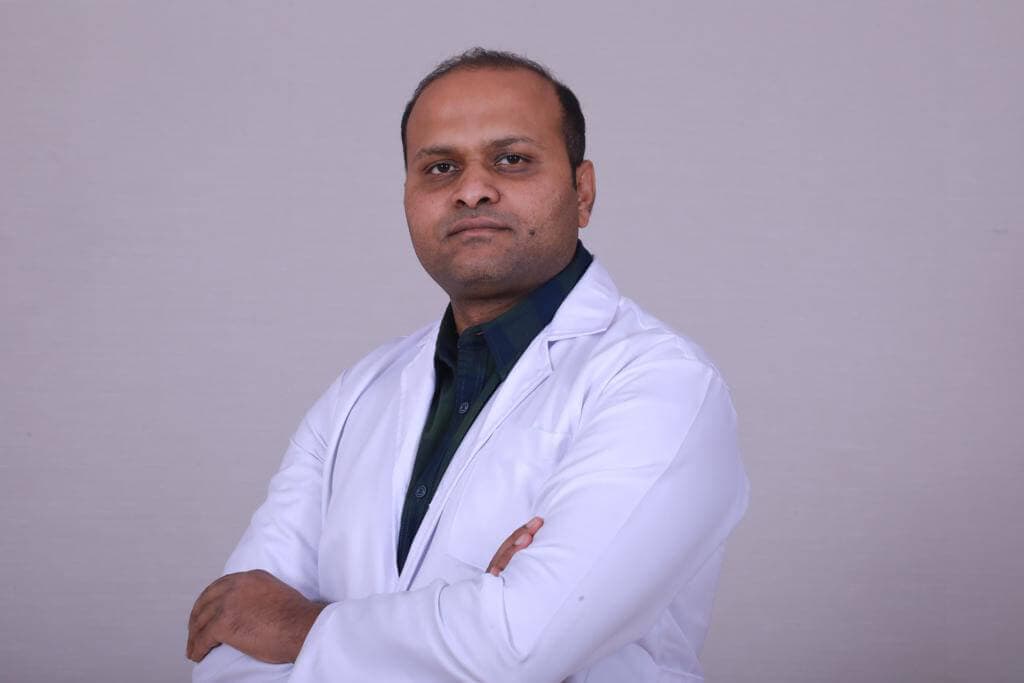
Dr. Sathya Vamsi Krishna

Hand, Upperlimb & Reconstructive Micro-Vascular Surgeon,
Brachial Plexus & Peripheral Nerve Surgeon, Bengaluru
MBBS, MS Orthopaedics, European Diploma in Hand Surgery
FHS (NUS, Singapore; CMC Vellore; Institute Kaplan)

Nerve Disorders

Cover brachial plexus injuries, nerve compressions, tumors, and reconstructive nerve surgeries. These affect sensation and muscle control in the upper limb and often require specialized microsurgical intervention.

Dr. Vamsi combines precise diagnostics with advanced surgical and non-surgical treatments tailored to each patient’s needs. His patient-centric approach ensures optimal recovery and restoration of hand function with minimal downtime.

Dr. Vamsi’s Three-Step Approach to Treating Hand Disorders

Precise Diagnosis

Dr. Vamsi uses clinical evaluation and imaging to identify the exact cause and severity of the disorder.

Targeted Treatment

He begins with non-surgical options like splints, therapy, or injections, and opts for minimally invasive surgery if needed.

Focused Recovery

A structured rehab plan ensures patients regain hand strength, flexibility, and daily function effectively.

Conditions Treated

Brachial Plexus & Peripheral Nerve Injuries
Damage to the network of nerves controlling the shoulder, arm, and hand, often due to trauma, leading to weakness, numbness, or paralysis.
Compressive Neuropathy
Nerve irritation or compression (like carpal or cubital tunnel syndrome) causing pain, tingling, or muscle weakness, usually relieved by decompression.
Nerve Transfer
A surgical technique where a healthy nerve is rerouted to restore function in a damaged area, commonly used in brachial plexus injuries.
Nerve Reconstruction
Repair or grafting of damaged nerves to restore sensation and motor function, often used after traumatic injuries.
Nerve Tumors
Benign or malignant growths affecting nerves, which may cause pain, numbness, or weakness, and are often surgically removed if symptomatic.
Tendon Transfers
A procedure where functioning tendons are rerouted to restore lost motion caused by nerve injury or muscle damage.

Dr. Sathya Vamsi Krishna

  • MBBS MS (Ortho) European Diploma in Hand Surgery
  • Dr Paul Brand Fellowship in Hand and Reconstructive Microsurgery (CMC Vellore)
  • Fellowship in Hand and Microsurgery (National University Singapore)
  • Fellowship in Hand and Upper Extremity Surgery (Institut Kaplan, Barcelona)

What is hand surgery?

Hand surgery is the field of medicine that includes the investigation, preservation, and restoration by medical, surgical, and rehabilitative means of all structures of the upper extremity directly affecting the form and function of the hand and wrist.

Why visit a hand surgeon?

Hand is an unique part of a human body made up of complex arrangement of bone, tendons, muscles, nerves, blood vessels and skin. All the elements should be in good condition to achieve a functional hand. An injury or disease can affect any or all of these structures and impair the use of the hand. The Hand surgeon is a specialist with knowledge and experience who is capable to diagnose all hand and upper limb disorder and restore it to its original form. Not all condition require surgery and non- surgical methods like splint, therapy, injections and mediation are often recommended.
What are common symptoms in hand and upper limb?


  • Pain
  • Tingling or numbness affecting upper limb.
  • Difficulty is performing daily task using hands.
  • Any injury ranging from simple sprain to fracture.


Ask Dr. Sathya Vamsi Krishna?

Q